
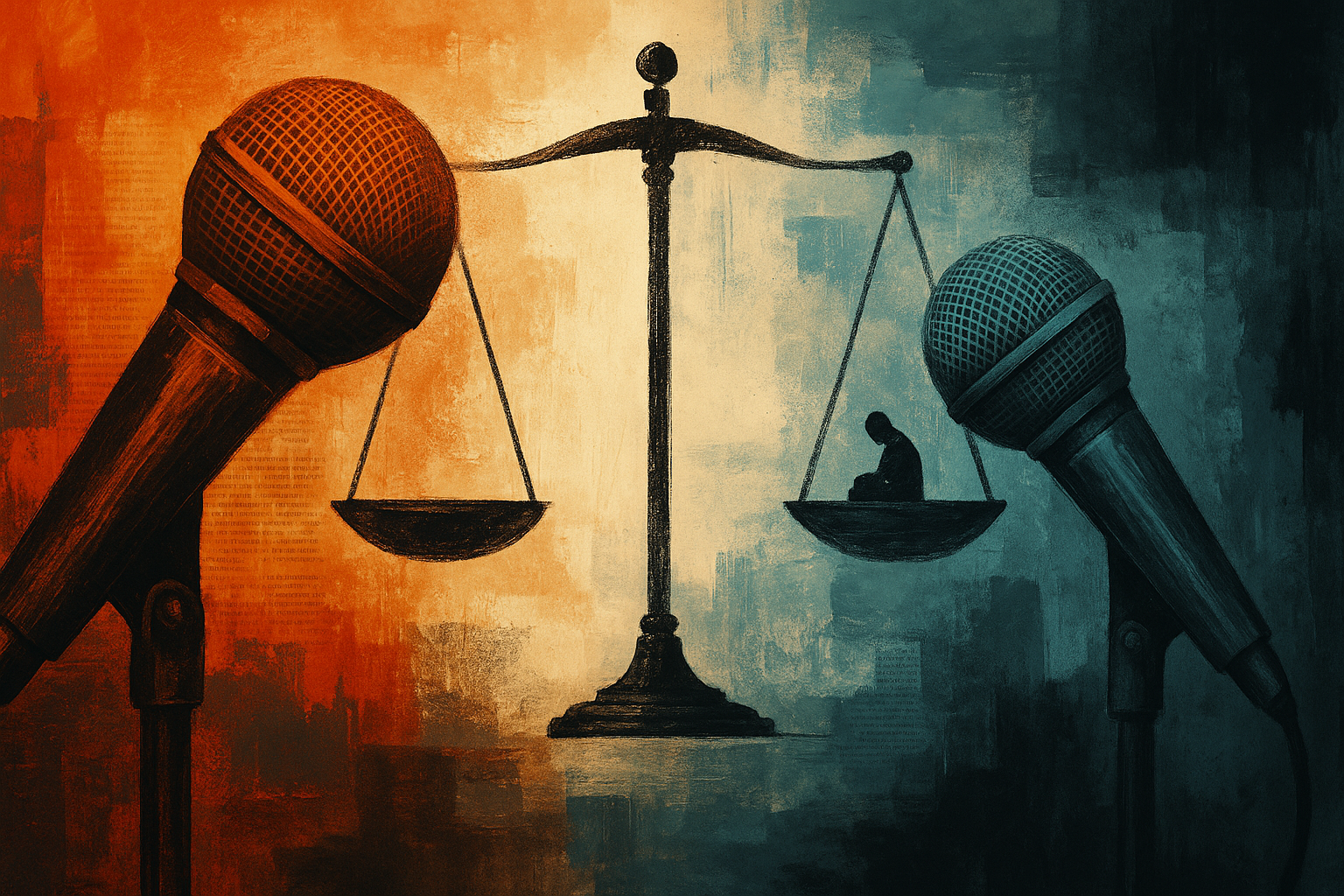
In recent years, numerous studies and media analyses have documented a stark imbalance in how Western media (especially in the US and UK) amplify Israeli (often termed “Zionist”) voices and narratives while marginalizing Palestinian/Arab/Muslim perspectives. This imbalance is evident in the quantity of coverage, the framing and language used, the selection of voices and guests, and the broader context provided (or omitted) in reporting. The result is that pro-Israel narratives appear much louder and more prevalent in mainstream discourse than pro-Palestinian ones. This report compiles empirical data and research findings from the past few years to objectively illustrate these disparities and examine the factors that produce a systematic bias in favor of the Israeli point of view.
Quantitative Imbalance in Coverage
Multiple analyses have quantified how Israeli deaths and perspectives receive disproportionate attention relative to Palestinian ones:
- Coverage Per Casualty: A 2025 study of BBC content found that Israeli fatalities received vastly more media attention per victim than Palestinian fatalities. Specifically, the BBC gave 33 times more coverage per Israeli death than per Palestinian death in its reporting on the 2023–24 Gaza conflict. Similarly, data journalism by Mona Chalabi illustrated that The New York Times published roughly one article per Israeli killed (a 1:1 ratio), but only one article per four Palestinian deaths, a rate 4× greater attention to Israeli lives. In The Wall Street Journal, the imbalance was even starker – about 1 article per 17 Palestinian deaths. These patterns imply that, in newsworthiness, an Israeli life is treated as far more significant than a Palestinian life.
- Historical Patterns: Bias in coverage is not new. During the 2008–09 Gaza war (Operation Cast Lead), when Palestinians were dying at 106 times the rate of Israelis, The New York Times mentioned only 3% of Palestinian deaths in headlines or lead paragraphs. In-depth analysis showed the Times effectively covered 431% of Israeli deaths versus only 17% of Palestinian deaths – roughly a 25:1 ratio. In practice, every Israeli death was reported multiple times across stories, whereas less than one-fifth of Palestinian fatalities were even noted. Another content study covering 50 years (1967–2017) of U.S. media found that Israeli sources and officials were quoted about 2.5× more often than Palestinian sources, giving Israelis a huge advantage in framing events for the audience. Over that period, references to the Israeli occupation of Palestinian territories declined by 85% in news headlines, indicating that basic context about Palestinian lived reality has been increasingly omitted.
- Screen Time and Guest Balance: On television, especially in the US, Israeli spokespeople and proponents overwhelmingly outnumber Palestinian voices. In the first month of the 2023 Gaza war, the official Israel Defense Forces spokesman appeared 44 times on major US cable networks (CNN, MSNBC, Fox News), while mentions of Israeli concerns outpaced mentions of Palestinians by 4 to 1. A review of elite Sunday political talk shows (NBC’s Meet the Press, CBS’s Face the Nation, ABC’s This Week, etc.) likewise found they “overwhelmingly featured pro-Israel guests,” with discussions aligning far more with pro-Israel talking points. In the UK, the BBC was found to prioritize Israeli perspectives 11-fold: its presenters and reporters shared the Israeli point of view 2,340 times in the studied period, versus only 217 times for the Palestinian perspective. Such an imbalance in who gets to speak ensures the pro-Israel narrative is heard far more frequently.
Language and Framing Biases
Beyond raw coverage, media outlets often frame Israeli and Palestinian stories in markedly different ways. The tone, wording, and context systematically humanize Israeli victims and dehumanize or “other” Palestinian ones:
- Emotive vs. Passive Language: Media reports use highly emotive, condemnatory language for violence against Israelis, but neutral or euphemistic language for violence against Palestinians. The BBC’s coverage in 2023–24 used words like “brutal, barbaric, massacre, atrocities, slaughter” far more often when describing Israeli victims than Palestinian ones. For example, the term “massacre” was applied 18 times more to Israeli casualties than to Palestinians. The word “murder” appeared 220 times in BBC reports for Israeli deaths but just once for Palestinian deaths. Conversely, Palestinian deaths were frequently described with passive or agent-less phrasing. One infamous example was a New York Times headline during a Gaza bombing: “Missile at Beachside Gaza Cafe Finds Patrons Poised for World Cup” – wording that mystified the actor (as if a missile independently “found” its victims) instead of clearly stating that an Israeli airstrike killed Palestinians watching a football match. In U.S. cable news, the killing of Palestinian civilians (even children) was routinely described in the passive voice – e.g. “left to die” – obscuring the perpetrator and even implying culpability on the victims or their families, whereas Israeli deaths were explicitly described with active, violent terms like “massacred”. This linguistic contrast softens Israeli culpability and diminishes global sympathy for Palestinian suffering.
- Humanization of One Side: Western media outlets tend to individualize and humanize Israeli victims – showing their names, faces, and personal stories – much more than they do for Palestinians. Despite Palestinians in Gaza suffering 34 times more fatalities than Israelis over a recent one-year period (Oct 2023–Oct 2024), the BBC ran almost equal numbers of humanizing victim profiles for Israelis and Palestinians. In other words, a handful of Israeli victims received as many in-depth profiles as tens of thousands of Palestinian victims. Israeli hostages or victims are often the focus of empathetic storytelling, while Palestinian victims are treated as statistics. During a brief ceasefire exchange in January 2025, for instance, Israeli media and the BBC gave extensive emotional coverage to the return of a few Israeli hostages, yet 90 Palestinian detainees (including many held without charge) released from Israeli prisons were mostly unnamed and received virtually no personal narrative in coverage. This imbalance in storytelling – one side’s suffering portrayed via relatable individual stories, the other side’s suffering anonymized – powerfully shapes audience perceptions. It reinforces the idea that Israelis are “people like us” with inherent innocence, while Palestinians remain a faceless, distant mass.
- Labels and Legitimacy: The terminology used by media further reflects bias. Israeli civilians captured by Palestinian fighters are unequivocally termed “hostages,” invoking sympathy and illegality, whereas Palestinians (even minors) imprisoned by Israel are labeled “detainees” or “prisoners,” terms that imply criminality. One media review noted that the BBC almost never referred to Palestinian captives as “hostages” – even those held without charge – while Israelis held by Hamas were universally called hostages. Similarly, Israeli victims of violence are routinely described as victims of “terrorism,” whereas Palestinian deaths at the hands of Israelis are often described as unfortunate “incidents” or accidents. A linguistic analysis by Glowacki (2014) found a consistent pattern: Israeli casualties were described as victims of terrorist attacks, whereas Palestinian fatalities were frequently portrayed as accidental or indirect (“caught in crossfire,” “died in clashes,” etc.). These choices in wording confer legitimacy to Israeli actions (self-defense against “terrorism”) while downplaying Palestinian suffering as an almost natural or self-inflicted occurrence.
- Caveats and Doubts: When reporting Palestinian casualties, Western outlets often introduce caveats that undermine their credibility – for instance, attributing death tolls to “the Hamas-run Gaza health ministry” in nearly every article. The BBC appended this phrase over 1,150 times to casualty reports. While sourcing is important, the incessant emphasis that Palestinian casualty figures come from a “Hamas-linked” source (even when verified by UN and independent bodies) contrasts with the treatment of Israeli claims, which are typically quoted without such skepticism. These editorial decisions subtly invite the audience to doubt or discount Palestinian accounts of their own suffering.
- Contextual Omissions: Another form of narrative bias is the lack of historical or political context when covering Palestinian actions. Media coverage often starts the clock when Israelis are victimized, portraying Palestinian violence as sudden and baseless. The October 7, 2023 Hamas attack, for example, was endlessly described in gruesome detail (as it should be), and it was referenced in 40% of BBC online articles about Gaza over the following year. However, that same coverage almost never mentioned why Palestinians were fighting: Israel’s prior decades of occupation, blockade, and assaults were virtually missing. Only 0.5% of BBC articles in that period even mentioned the occupation or the long-term violence against Palestinians before Oct 7. Terms like “siege” or “blockade” of Gaza, or references to Israel’s settlement expansion and apartheid-like policies, appeared in <1% of reports. This systematic omission of context – described as an “institutional” failing by media monitors – frames Palestinian violence as irrational aggression, rather than part of a cycle of conflict with deep roots. It also feeds a narrative of Israeli actions as simply retaliatory or defensive, since the initiating context is obscured. As one media analyst put it, Western outlets regularly portray Israel as the perpetual victim and absolve it of prior responsibility, never clearly conveying that Palestinians are a people under a prolonged military occupation and siege.
Amplification of Pro-Israel Voices
The dominance of the “Zionist” narrative is further enabled by whose voices get amplified in public discourse and media forums. Each supportive platform – be it news channels, radio shows, or expert panels – tends to magnify pro-Israel viewpoints, often crowding out dissenting perspectives:
- Media Guest Selection: In both the US and UK, mainstream media disproportionately platform Israeli officials, pro-Israel analysts, and supportive Western voices. The result is a kind of echo chamber. An analysis of 50+ major Sunday talk shows in the U.S. (Oct 8, 2023 – Jan 2024) found overwhelmingly one-sided guest lineups discussing Gaza: current or former U.S. officials (like the Secretary of State or White House spokespeople) and other pro-Israel figures dominated the conversations. Alternative viewpoints – e.g. Palestinian representatives, human rights experts, or critics of Israeli policy – were largely missing. In the UK, similar patterns have been observed. For example, the BBC was found to press pro-Palestinian interviewees hard to condemn Hamas, asking that question of guests 38 times after Oct 7, while never similarly pressing Israeli officials to condemn the killing of Palestinian civilians. This asymmetric interviewing further reinforces the framing of one side (Palestinians) as the ones who must answer for violence.
- Talk Radio and Public Discourse: In popular call-in shows and news radio, hosts and callers often skew heavily toward the pro-Israel stance, creating an impression of consensus. Anecdotal evidence from UK radio indicates that proposals or statements sympathetic to Palestinians frequently meet a wall of hostility. (For instance, when a British political leader recently suggested recognizing a Palestinian state, one London radio program received a succession of hostile callers and even an “expert” guest who uniformly dismissed the idea – an example mirrored in many such forums.) While these segments are presented as spontaneous public reactions, they often reflect how deeply the dominant narrative has been internalized by audiences and curated by producers. Dissenting or pro-Palestinian voices in such settings are either absent or outnumbered, making the Zionist position appear not only mainstream but virtually unchallenged.
- Agenda Setting and Story Priorities: Pro-Israel narratives also benefit from concerted agenda-setting. Israeli government agencies and advocacy groups are highly proactive in shaping media coverage – a practice Israelis term hasbara (propaganda or public diplomacy). During crises, the Israeli side provides a constant stream of spokespeople, press releases, English-language social media updates, and ready-for-broadcast footage, ensuring their message penetrates news cycles quickly. Media monitors noted that by the time Palestinian deaths in Gaza climbed into the tens of thousands in November 2023, American TV news was still giving greater airtime to the story of a few hundred Israeli hostages held by Hamas. The emotional narrative of Israeli hostages – reinforced by repeated interviews with their families and officials – led the news, while the soaring Palestinian civilian toll became a secondary statistic. In effect, Israeli interests have been adept at keeping their preferred themes (Israeli victims, Hamas threats, Israeli “self-defense” actions) at the forefront, often eclipsing any focus on Palestinian victims or rights.
- Selective Expertise: The pool of “expert” commentators on Middle East affairs in Western media is itself skewed. Think-tanks and analysts with pro-Israel leanings (or at least establishment views) are frequently tapped for commentary on CNN, BBC, Sky News, etc., whereas Palestinian scholars or advocates rarely get the same platform. This creates a reinforcing cycle: experts who echo the prevailing narrative are seen as more “objective” or credible, thus invited more often, thereby amplifying one side’s voice. Meanwhile, professionals who openly sympathize with Palestinians are often painted as biased or extreme. There have been instances of journalists or commentators being reprimanded or removed for pro-Palestinian statements – for example, a CNN contributor was fired after speaking at the UN about Palestinian rights, and multiple journalists faced sanctions or job pressures for simply acknowledging the humanitarian perspective from Gaza. These industry pressures send a clear signal within newsrooms: challenging the dominant pro-Israel narrative can be career-threatening, whereas supporting it is expected. Over time, this dynamic severely narrows the range of voices and opinions that media audiences hear.
Structural Factors Behind the Bias
Understanding why this imbalance persists requires examining political and institutional drivers. Media content does not exist in a vacuum – it is shaped by the broader power structures, incentives, and constraints within which journalists operate. Key factors include:
- Alignment with Western Foreign Policy: The most decisive factor is that governments in the US and UK (and much of the West) are staunchly pro-Israel, and mainstream media tend to mirror the foreign policy consensus. Scholars of journalism note that on critical international issues, especially in conflict, media outlets often “defer to power” – they reflect and amplify the narratives of their home government and close allies. In the case of Israel-Palestine, Washington and London have historically supported Israel diplomatically and militarily, so media organizations (consciously or not) internalize a pro-Israel frame as the neutral or default stance. Dissenting too far – for instance, highlighting Israeli human rights violations or questioning massive US aid to Israel – means going against the grain of official policy, something major newsrooms rarely do. This deference is “deeply ingrained” in journalistic culture. The effect is that Israeli perspectives (often delivered via Israeli officials or U.S. spokespeople) set the parameters of debate on air, whereas Palestinian perspectives that conflict with Western policy (e.g. describing the situation as apartheid or settler-colonialism) are downplayed or ignored.
- Mobilized Interest Groups and Lobby Pressure: Pro-Israel advocacy organizations have long exercised strong influence over public discourse. In the U.S., groups like AIPAC, the ADL, CAMERA, and others are quick to unleash “flak” – sharp criticism, complaints to editors, accusations of anti-Israel bias or even antisemitism – whenever coverage is deemed too sympathetic to Palestinians or too critical of Israel. This creates a climate of intimidation in newsrooms. Editors may over-correct to avoid controversy, consciously giving more weight to Israeli concerns to preempt charges of bias. In the UK, similar pressure comes from groups and an active pro-Israel lobby (e.g. Conservative Friends of Israel, various media watchdogs). For example, when the BBC does report harsh realities (such as calling Gaza’s conditions “hellish”), it often faces public attacks and demands for apology from these lobbies. Over time, the continuous negative feedback (and sometimes threats to funding or careers) generates self-censorship. Journalists learn which narratives will bring a barrage of complaints and which will not. A media professor notes that this “negative flak” from organized groups is a known distortion effect on coverage – essentially a deterrent against robustly presenting the Palestinian side. By contrast, there are far fewer well-resourced groups monitoring Western media for anti-Palestinian bias, meaning slanted coverage against Palestinians rarely provokes the same backlash or costs for outlets.
- Corporate Ownership and Risk Aversion: Most major Western media are owned by large corporations or billionaires, for whom controversy can threaten business interests. Coverage that appears to challenge powerful allies (or unsettles significant portions of the audience) is seen as a business risk. Owners and top editors, even without explicit interference, often encourage a cautious editorial line on Israel-Palestine – one that sticks to familiar narratives – to avoid alienating advertisers, shareholders or political friends. One direct example in the U.S. is that media companies have financial ties and audience bases that lean toward a pro-Israel viewpoint, especially among older demographics. This leads outlets like CNN or the NY Times to be more wary of images of Palestinian suffering (which might elicit calls of “bias” or upset certain viewers) than of images of Israeli suffering. The perceived audience preference plays a role: news executives often assume their readership identifies more with Israelis than Palestinians, a calculus that affects story placement and tone. In the UK, the influence of media proprietors is also notable – many British newspapers with the loudest voices (e.g. the Telegraph, Times, Daily Mail) are explicitly pro-Israel in editorial stance, which spills into news selection and framing. Even ostensibly impartial broadcasters like the BBC have internalized establishment perspectives to the point that, as one former BBC director admitted, they reflexively follow the government line on defining terrorism and allies.
- Lack of Diverse Perspectives in Newsrooms: Western newsrooms have historically had very few Palestinians, Arabs, or Muslims in positions of influence. This underrepresentation matters: journalists from affected communities might question dominant frames or insist on including context that others omit. Mona Chalabi, a data editor at Guardian US, pointed out that Arab reporters within major outlets often feel their objectivity is unfairly scrutinized if they empathize with Palestinians, whereas no such scrutiny applies to staff with personal ties to Israel. This double standard in newsroom culture – effectively privileging the Zionist perspective as “neutral” – means editorial meetings and story decisions often lack a countervailing voice to advocate for the Palestinian narrative. The result is institutional bias: not necessarily a top-down directive, but a groupthink where everyone from reporters to producers may unconsciously echo the same assumptions (e.g. “Hamas attack = terrorism” gets emphatic coverage, while “Gaza siege = collective punishment” gets muted). The rarity of Muslim or Arab voices in Western media leadership perpetuates a cycle where coverage fails to challenge ingrained stereotypes about Palestinians. As media theorists note, this homogeneity reinforces one narrative as common sense, while alternative views are marginalized or treated as suspect.
- Historical and Cultural Sympathies: The Western public narrative around Israel has been shaped by decades of cultural familiarity and trauma narratives that favor the Israeli side. Israel is often portrayed as a liberal democracy, an outpost of the West born from the Holocaust’s aftermath, which garners it sympathy and identification in Europe and America. Palestinians (and by extension Arabs/Muslims) have been orientalized and othered in many Western imaginations – frequently depicted through lenses of terrorism, religious extremism, or chaos. This cultural bias seeps into media framing. Scholars have observed that media coverage frequently employs enduring colonial tropes, casting Palestinians as irrational aggressors or “violent Arabs” and Israelis as civilized victims acting in self-defense. For example, early in the Gaza war, unverified reports of extreme atrocities by Hamas (like “beheaded babies”) spread like wildfire in Western media without evidence, resonating with age-old tropes of barbaric enemies. Such reports were later debunked, but they had already framed the conflict in the harshest terms against Palestinians. Conversely, well-documented Israeli abuses (bombardment of hospitals, use of white phosphorus, etc.) never received the same visceral, repetitive coverage. This asymmetric credulity – quick to accept narratives of Palestinian savagery, slow to highlight Palestinian suffering – reflects a deeper institutional bias in legacy media. It normalizes the dehumanization of Palestinians to the point that even calls for their mass punishment or expulsion can be aired as reasonable opinion, whereas analogous dehumanization of Israelis or Jews would be (rightly) beyond the pale. In short, historical sympathies and racialized biases make it far easier for media to humanize one side of the conflict and not the other.
Conclusion
Across the UK and US media landscape, pro-Israel voices and narratives have consistently been amplified over pro-Palestinian ones, especially in the past few tumultuous years of the conflict. The evidence – from content analysis of headlines and airtime to linguistic studies of coverage – reveals a pattern of systematic bias: Israeli deaths and perspectives dominate news coverage, receive more sympathetic language, and benefit from greater context omission of their wrongdoing, whereas Palestinian deaths are underreported, depersonalized, and framed through a skeptical or adversarial lens. This imbalance is reinforced by the proactive efforts of Israeli officials and supporters to shape the narrative (and to pressure media outlets), and by structural tendencies of Western media to reflect their own governments’ pro-Israel stances and cultural biases.
The result is an environment in which the “Zionist voice” – that is, the perspective aligning with Israel’s narrative – sounds much louder in public discourse than the voice speaking for Palestinian rights and experiences. Data show this is not a subjective impression but an observable fact: by empirical measures (word counts, guest counts, story counts), the scales are tilted. The pro-Israel narrative is proactive and pervasive, echoed and magnified by politicians, experts, and media personalities in multiple forums, from cable news panels to radio talk shows. Meanwhile, Palestinian voices and narratives often struggle to be heard and are frequently met with hostility or dismissal when they do surface.
Crucially, keeping this analysis objective and rooted in data is important – this is not about assigning moral truth to either side’s claims, but about identifying bias in how information is presented. The findings cited here underscore that mainstream Western media have not been neutral conveyors of fact on the Israel-Palestine question; rather, they have routinely privileged one side’s human story and political framing over the other’s. As William Youmans notes, such partiality erodes journalistic credibility, especially as more audiences become aware of the discrepancies. Indeed, hundreds of journalists themselves have spoken out against the dehumanizing rhetoric used for Palestinians and the double standards in coverage.
In sum, the louder volume of the Zionist/pro-Israel voice in Western media is a product of measurable imbalances – in coverage, language, representation, and institutional dynamics – that have been documented in academic and media watchdog research. Acknowledging these disparities is a first step toward a more balanced and fair media treatment, where no victim’s life is valued more than another’s, and where narratives from all sides are heard and scrutinized with equal rigor.
Sources:
- Centre for Media Monitoring (2025). BBC Gaza Conflict Coverage Analysis – as reported in Novara Media.
- Youmans, W. (2024). “Accounting for Biases in U.S. Media Coverage of Gaza.” DAWN MENA (Mar 20, 2024).
- Decolonize Palestine (n.d.). “Myth: There is a media bias against Israel” – citing 416 Labs study and others.
- Glowacki, J. (2014). Lexical and Semantic Representations in Media Coverage of the Palestine–Israel Conflict.
- Middle East Monitor (2019). “Fifty years of US media study reveals massive anti-Palestinian bias” (report on 416 Labs study).
- Chalabi, M. (2023). Instagram data visualizations on NY Times coverage disparities; coverage in Washington Post.
- BBC Coverage Statistics via CfMM, reported by Novara.
- The Intercept (Johnson & Ali, 2023) analysis of U.S. newspaper language.
- The New Arab (Saeed, S., 2023). “Western media dehumanises Palestinians…”.
- Additional data compiled from Al Jazeera Institute, Media Reform UK, and academic theses on media framing. (These provide context on consistent pro-Israel framing in coverage.)


