
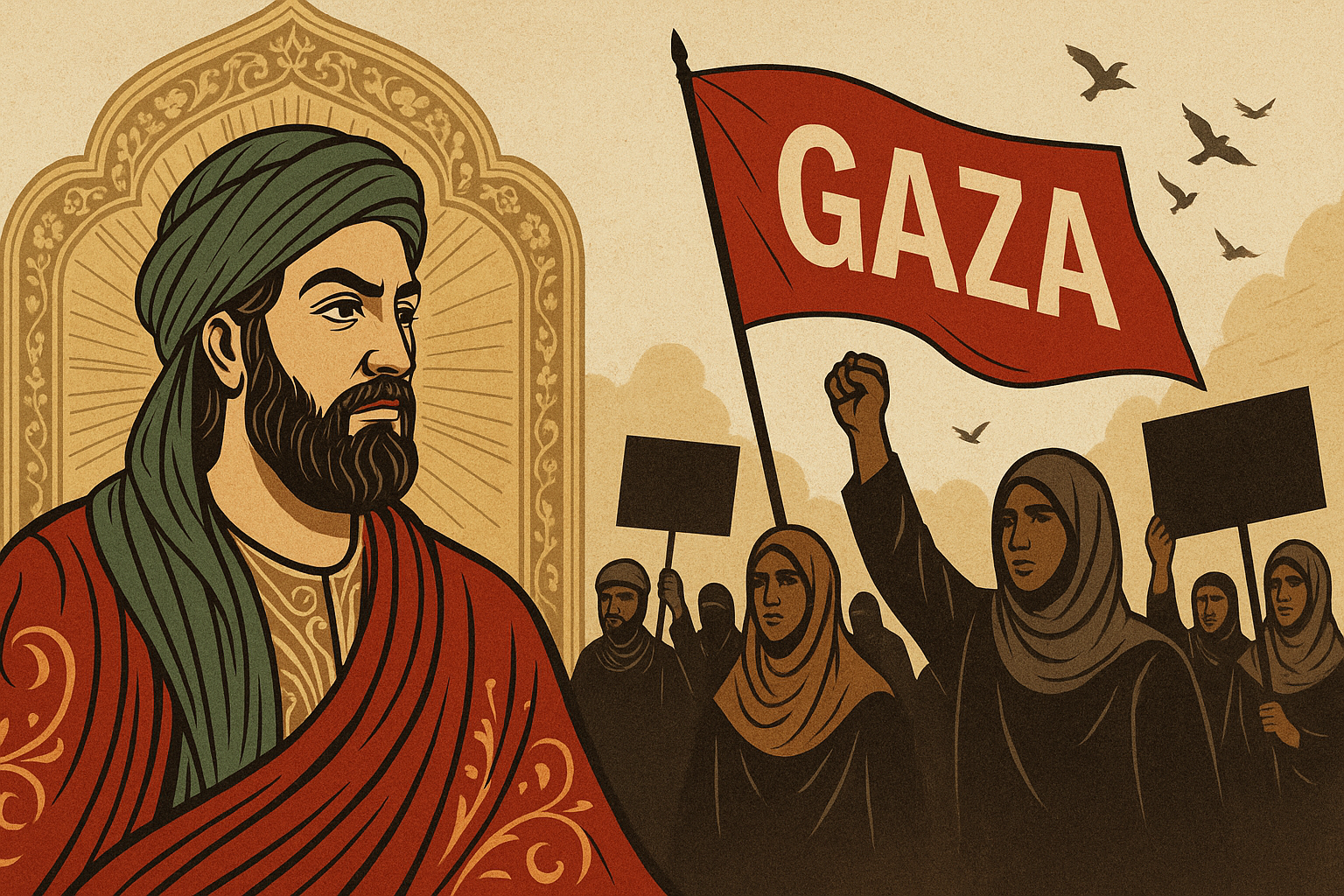
A living symbol of resistance
When millions of believers gather this Muharram, they will chant a truth that has echoed across fourteen centuries: “Every day is Ashura; every land is Karbala.” Imam Hussain — grandson of the Prophet Muhammadﷺ, martyred on the scorching plains of Karbala in 680 CE — has never been merely a historical figure. He is the enduring archetype of principled resistance, a moral compass for all who confront tyranny. In 2025 the 10th of Muharram (Ashura) is forecast to fall between 6 and 7 July (with some local communities marking it earlier, on 6 July, because of regional moon-sighting). The date may shift by a sunset, but the message does not: stand up, even when the odds say stand down.
Karbala in context
The Battle of Karbala pitted fewer than 100 companions of Imam Hussain against the professional army of the Umayyad caliph Yazid. Out-manoeuvred and cut off from water, Hussain refused to pledge allegiance to an unjust ruler and was slain with most of his family. For Shiʿa Muslims, the tragedy became the heart of devotional life; for Sunni Muslims, it stands as a wrenching chapter of early Islamic history and a testament to martyrdom. Generations of poets, reformers and revolutionaries have drawn on Karbala to critique despots from colonial governors to modern strongmen.
Why Ashura still matters
- Moral clarity in the fog of politics
Hussain’s refusal to compromise established a benchmark: legitimacy in Islam is inseparable from justice. His stand still informs contemporary Muslim debates on corruption, authoritarianism and moral responsibility. - Unity through shared grief
The tears of Ashura are not sectarian. In Istanbul, Lagos and London, Sunnis recite qasidas praising Hussain; in Karachi, Christians and Hindus set up sabeel stalls to offer symbolic water to mourners. Karbala reminds the ummah that its deepest values transcend jurisprudential labels. - A pedagogy of resistance
Ashura services teach civil courage to children: confront oppression, champion the voiceless, prefer dignity over convenience. Those lessons resonate today from Kashmir to Chicago public schools.
Gaza 2025: Karbala revisited
As the faithful ready their black banners, Gaza buries its dead. Israeli bombardment has killed an estimated 57,000 Palestinians and wounded more than 134,000 since October 2024; 39 more were killed in Gaza City just today, 6 July 2025. Human-rights groups liken the siege to “collective punishment on an industrial scale,” yet diplomatic paralysis persists. In this context, Hussain’s cry — “Death with dignity is better than life with humiliation” — speaks directly to besieged Gazans and to a global conscience at risk of fatal numbness.
What a united response could look like
| Pillar | Action item | Precedent |
|---|---|---|
| Humanitarian | Launch a trans-sect coalition to fund mobile clinics and water-desalination units for Gaza hospitals. | British Muslim charities joined forces after the 2005 Pakistan earthquake, pooling logistics expertise. |
| Political | Demand that OIC states condition military or technology deals on an immediate ceasefire and war-crimes inquiry. | South Africa leveraged U.S. trade benefits to push anti-apartheid sanctions in the 1980s. |
| Theological | Dedicate Ashura majalis and Friday sermons to Gaza’s plight, framing it as the Karbala of our age. | Scholars in Indonesia and Nigeria linked Karbala to anti-colonial movements in the 1940s–50s. |
| Grass-roots | #OneAshuraOneUmmah social-media campaign: a unified fast on 9–10 Muharram plus curated educational threads on Hussain’s ethics. | The global #Blackout4Palestine Instagram protest (2024) reached 50 million users in 24 hours. |
Challenges to overcome
- Sectarian cynicism – Extremist narratives still weaponise Ashura imagery for intra-Muslim score-settling. Counter-messaging must highlight shared prophetic lineage and juristic endorsements of Hussain’s stature across schools.
- Media fatigue – With Gaza headlines scrolling daily, emotional exhaustion is real. Storytelling rooted in Karbala’s timeless drama can recharge moral attention.
- Geopolitical realpolitik – Some Muslim-majority governments prioritise security ties with Israel or the U.S. Grass-roots pressure, sharpened by Ashura’s moral capital, is essential to nudge policy.
Conclusion: Every land is Karbala
Ashura 2025 arrives amid one of the darkest chapters in Palestinian history. If Hussain taught anything, it is that silence in the face of oppression is complicity. From Jakarta to Johannesburg, believers will beat their chests not merely in grief for a seventh-century martyr but in pledge to the living victims of today’s Yazids. Let this Ashura be more than ritual mourning; let it be the moment Muslims move from remembrance to resolute action — for Gaza, for every oppressed people, and for the soul of an ummah that still believes justice is worship.
#ImamHussainAS #HazratImamHussain #Ashura2025 #GazaUnderAttack #EveryDayIsAshura

